
Most singers underestimate the impact that pitch control can have on their overall vocal performance. By mastering pitch control, you can significantly improve the clarity and precision of your notes, leading to more enjoyable and effective singing lessons. This skill not only builds your confidence but also enables you to express yourself better through music.
Enhancing your pitch accuracy can prevent vocal strain and injury, allowing you to progress faster and perform safely. Emphasizing pitch control in your lessons can transform your vocal journey and help you reach your full potential.
Understanding Pitch Control
Your ability to understand pitch control is important to enhancing your singing lessons. It involves recognizing and adjusting the frequency of your voice to achieve accurate musical notes. With proper pitch control, you can express emotions more effectively, connect with your audience, and build confidence in your vocal range.
Gaining a solid foundation in pitch control allows you to explore various singing techniques and styles while ensuring your performances resonate with clarity and precision.
Definition and Importance
Pitch refers to the perceived frequency of sound, determining how high or low a note is. It is important because accurate pitch is fundamental to singing in tune, influencing the overall quality of your vocal performance.
Mastering pitch control enables you to deliver songs with more expression and emotional depth, enhancing not only your technical skills but also your artistic interpretation. Without proper pitch control, your performances can sound dissonant, detracting from your audience’s experience.
The Science Behind Pitch
An understanding of the science behind pitch reveals how sound waves interact with our vocal cords and resonate through our bodies. The frequency of sound waves determines the pitch you produce, measured in Hertz (Hz). When you sing, your vocal cords vibrate, creating specific frequencies that correspond to musical notes.
Mastering pitch control involves training your ear to identify these frequencies, making adjustments in your technique, and using your diaphragm for support. Factors such as tension, breath control, and vocal health also play a significant role in achieving optimal pitch.
Even slight variations in pitch can evoke strong emotional responses, highlighting the importance of precision in singing. If you sing off-pitch, it undermines your efforts and may even harm your vocal cords over time. By understanding the relationship between frequency and sound production, you can improve your pitch accuracy and stamina.
Additionally, using techniques such as ear training and resonance exercises can provide significant benefits, ultimately enhancing the quality and power of your performances.

Techniques for Improving Pitch Control
One effective way to enhance your singing is to focus on various techniques that specifically target pitch control. Incorporating these methods into your practice will provide you with a solid foundation for accurate pitch production, leading to overall vocal improvement.
Combining traditional exercises with innovative approaches can elevate your singing capabilities, making it easier to reach those high notes and maintain pitch stability throughout your performances.
Vocal Exercises
At the heart of improving your pitch control are vocal exercises designed to develop your ear and strengthen your voice. Practicing scales, arpeggios, and interval training will help you internalize pitch relationships and boost your confidence when singing.
Engaging regularly in these exercises will lead to noticeable improvements in your vocal accuracy and stamina as you gain control over your pitch.
Digital Tools and Apps
Above traditional techniques, the integration of digital tools and apps can significantly enhance your pitch control practice. These resources provide interactive ways to train your ear, monitor your progress, and make practicing more engaging.
By using a combination of software and mobile applications, you can fine-tune your pitch accuracy in real-time, ensuring you’re always on track.
For instance, many apps offer visual feedback on your pitch, allowing you to see when you’re hitting the right notes or slipping off course. Some applications even feature vocal exercises designed for your specific skill level, providing structured practice sessions.
Additionally, you can record your voice and compare it against professional benchmarks, giving you clear insights into your progress. Utilizing these tools can create a more interactive and effective practice experience, leading to greater mastery of pitch control.
The Role of Breathing in Pitch Control
Some singers underestimate the significance of proper breathing when it comes to maintaining pitch control. Breath support is fundamental because it provides the necessary stability and control for your voice. When your breathing is coordinated, it enhances your ability to sustain notes and hit the intended pitches accurately.
This understanding can elevate your singing lessons, allowing you to explore your vocal capabilities more effectively.
Breath Support Techniques
Among the various techniques available, diaphragmatic breathing is paramount for singers. This technique involves engaging your diaphragm, allowing you to take deep breaths that support your sound production.
By practicing breath control through exercises such as slow inhalations and controlled exhalations, you can enhance your pitch accuracy and maintain resonance throughout your singing.
Connecting Breath with Pitch
With an awareness of how breath affects pitch, you will be better equipped to manage your vocal delivery. Utilizing your breath effectively ensures that your vocal cords are supplied with the right amount of air pressure, leading to a more stable sound.
This understanding also enables you to make necessary adjustments when transitioning between notes, ensuring a smoother performance.
In addition, the connection between breath and pitch is vital for achieving a balanced and resonant sound. When you engage your breath support properly, it creates a solid foundation that allows your vocal cord vibrations to resonate freely.
This is vital for producing clear pitches and avoiding pitch errors. If your breath flows unevenly, it can lead to pitch instability or wavering tones.
Therefore, cultivating this connection enhances your singing technique and adds depth and richness to your voice, empowering you to deliver more compelling performances.

How Pitch Control Influences Singing Styles
After mastering pitch control, you will find that it significantly influences your singing style. Enhanced pitch accuracy lets you express genres authentically, allowing your voice to resonate with the intended emotion.
By exploring the nuances of pitch control, you can improve your range and performance quality. For a deeper understanding, check out Mastering Pitch: Singing with power and confidence.
Classical vs. Contemporary
Any singer knows that classical and contemporary styles demand different approaches to pitch control. Classical singing focuses on precise intonation and a steady vibrato, while contemporary styles often embrace slight pitch variations that contribute to the emotional delivery of a song.
Genre-Specific Techniques
Above all, understanding genre-specific techniques is vital for refining your pitch control. Each genre requires different vocal techniques and approaches to pitch accuracy that can elevate your performance.
Hence, exploring various genres, such as jazz, pop, or opera, allows you to discover specific methods that enhance your pitch control. For instance, in jazz, you might incorporate blue notes, adding emotion through subtle pitch bends. In pop, using vocal riffs or runs can also create an engaging performance.
Focusing on these unique techniques not only boosts your pitch control but also allows for a more personal interpretation of the music, empowering you as a vocalist.
Incorporating Pitch Control into Singing Lessons
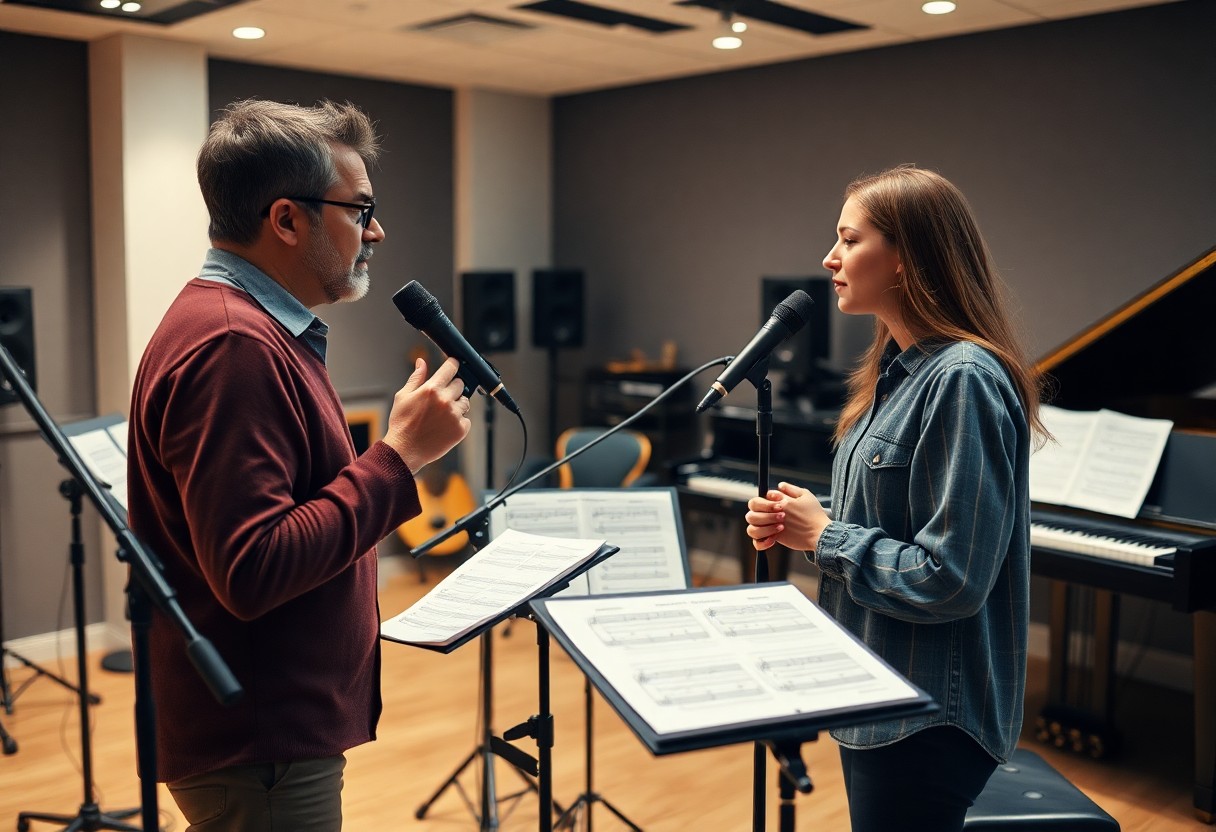
Not only does incorporating pitch control into your singing lessons enhance vocal technique, but it also fosters a greater understanding of musicality. By integrating exercises that focus on pitch accuracy, you enable yourself to develop imperative skills for better intonation and expressive singing.
Incorporating tools like a piano or tuning app can further aid in achieving precise notes, ensuring that you stay aligned with the musical pitch.
Lesson Structure and Planning
Besides focusing on vocal exercises, planning each lesson around specific pitch control techniques can greatly benefit your progress. Design your sessions to gradually introduce new concepts, ensuring that you cover a mix of warm-ups, scales, and song practice. This structured approach helps build a solid foundation, allowing your skills to evolve seamlessly over time.
Assessment and Progression
Planning your evaluation methods during lessons is imperative for tracking your growth in pitch control. Regularly assess your performance using recordings or feedback from your instructor, which will provide insight into areas that need improvement.
Further, building assessments around specific pitch-related tasks ensures you’re consistently challenged and progressing in your vocal journey. Consider utilizing scales or interval exercises to measure your pitch accuracy, and don’t hesitate to record your practice to analyze your improvement.
Consistently evaluating your progress will provide valuable insights into your strengths and areas for growth, paving the way for more effective learning and skill advancement.

Common Challenges and Solutions
To enhance your singing abilities, it’s necessary to recognize common pitch control challenges. Issues such as straining your voice, inconsistent pitch, and vowel modification can hinder your progress. By understanding these obstacles, you can implement tailored solutions, ensuring a smoother learning experience and improving your overall vocal performance.
Identifying Pitch Problems
Around every singer, there are often identifiable pitch problems, such as singing flat or sharp. You may notice your pitch fluctuating, especially during certain songs or vocal exercises. By actively listening and seeking feedback from instructors or recording your practice sessions, you can pinpoint specific areas that need improvement.
Strategies for Overcoming Issues
For effective pitch control, implementing targeted strategies is necessary. You should practice with a keyboard or piano, use pitch correction apps, and engage in consistent vocal exercises tailored to your needs. Additionally, warming up your voice and focusing on breath support can significantly improve your pitch accuracy.
Hence, the importance of effective practices cannot be overstated. By utilizing tools such as keyboard exercises or pitch apps, you can develop a deeper understanding of your vocal range. Engaging in regular vocal warm-ups allows your voice to function optimally while simultaneously strengthening your breath support.
Consistent practice is vital; without it, achieving lasting improvement may prove difficult. Embrace opportunities to receive feedback from instructors or peers, as this can help you accurately assess your pitch control challenges and foster significant growth in your vocal journey.
To wrap up
With these considerations, understanding pitch control is important for enhancing your singing lessons. By focusing on pitch accuracy, you can strengthen your vocal technique and improve your musical expression. This skill allows you to better connect with songs emotionally, develop a more confident stage presence, and facilitate effective communication with other musicians.
Embracing pitch control will not only elevate your vocal abilities but also enrich your overall performance experience, ensuring you make the most of your singing journey.